
Description
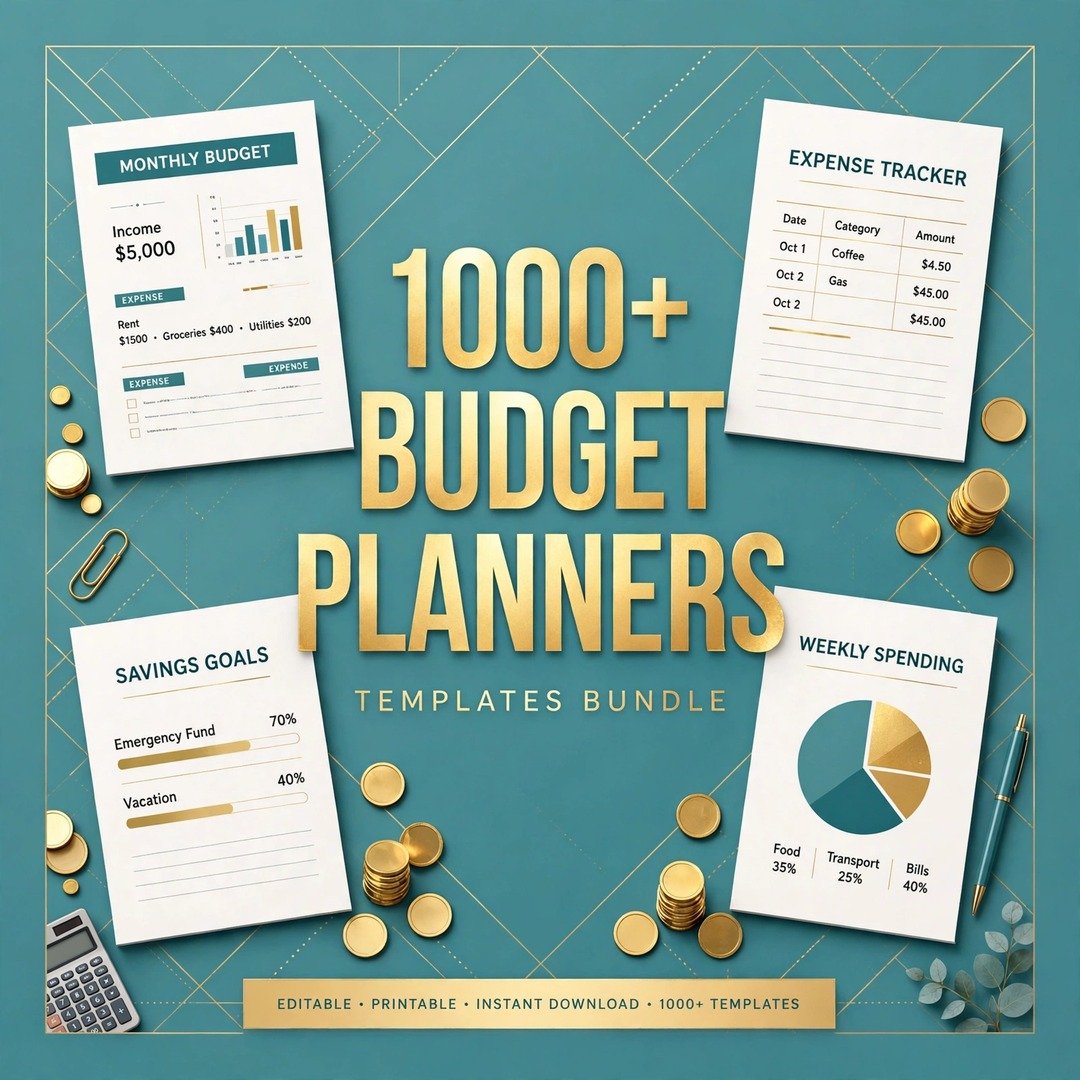
Budget planner templates help you plan your money with clear space for income, bills and savings. This bundle includes 1000+ budget planner templates with monthly budgets, expense trackers, savings planners and debt payoff pages.
What Is Included in the Budget Planner Templates Bundle
The bundle contains 1000+ budget planner templates. The product page lists monthly budgets, expense trackers, savings planners and debt payoff pages. Each template can be printed or used on a tablet, so you can track your money in the format that suits you.
How to Use Budget Planner Templates
Setting up a budget from a template follows a simple order:
- List your income for the month.
- Record fixed bills, such as rent, utilities and subscriptions.
- Allocate amounts to flexible spending and to savings.
- Track each expense as it happens, rather than at the end of the month.
- Review the budget at the end of the month and adjust the next one.
Who Should Buy This Bundle
These budget planner templates are made for anyone who wants to save more and spend with more care. They suit people starting a budget for the first time, and people who want a clearer view of savings or debt repayment.
Setting Savings and Debt Goals
A savings goal is easier to reach when it has a date and an amount. Write the goal at the top of the savings page, then set a regular transfer amount in your budget. If you are paying off debt, list each balance and its monthly payment, so you can see which balances are shrinking. For complex debt decisions, a qualified financial adviser can help you compare options.
Reviewing Spending Without Judgement
A budget is a tool for information rather than a test. If a category goes over, note why and decide how to adjust next month. Reviewing spending regularly helps you notice patterns, such as small purchases that add up over a month. This is general planning information, not financial advice.
Tips for a Budget You Will Keep Up
Keep your budget in one place, so you can update it quickly. Use simple categories at first, and add detail only when you need it. Update the expense tracker on the same day each week, so the figures stay accurate.
Common Mistakes to Avoid
A common mistake is recording only large expenses and forgetting small daily ones. Another is planning every pound or rupee before the month starts, which leaves no room for surprises. Avoid skipping the monthly review, because it is the step that makes the next budget more realistic.
Quick Checklist Before You Start
- Record your income and fixed bills first.
- Set a savings amount and a date for your goal.
- Track expenses weekly.
- Review and adjust the budget at the end of each month.
Frequently Asked Questions
Do I need accounting skills to use these budget planners?
No. The templates are ready to use, and you can start with simple categories.
Can I track both income and expenses?
Yes. The product page lists monthly budgets and expense trackers, so you can record money in and money out.
Can I use the templates for client work?
Check the licence terms that come with your download before you use the templates for client work or resale.
Keeping Your Records Private
Your budget contains personal financial details, so store the file somewhere private. If you print the pages, keep them in a secure place, and shred old copies when they are no longer needed. If you share a budget with a partner or family member, agree on who updates which page, so the figures stay accurate. This is general guidance, not financial advice.
Explore More Digital Products
Browse more planner bundles in the MN5 DIGITAL shop, or see all products from this seller on the RizStore page. For general information on managing personal finances, visit the Consumer Financial Protection Bureau.





Reviews
There are no reviews yet.